
NEWSROOM
Preventable adverse drug reactions: a major hidden cost driver in healthcare
Research Insight
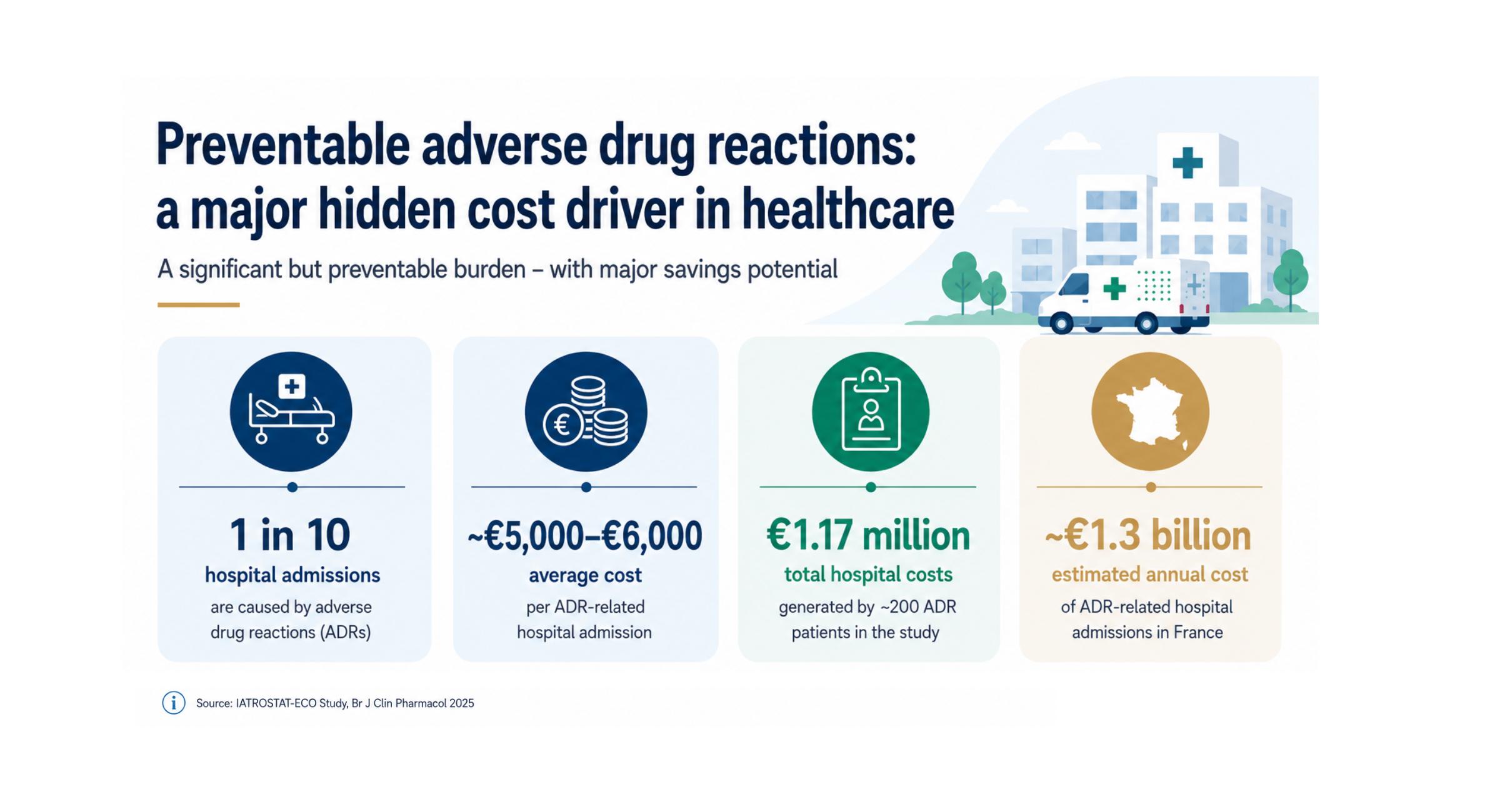
Adverse drug reactions (ADRs) represent a significant yet often underestimated burden for healthcare systems worldwide. Studies suggest that around one in ten hospital admissions are caused by adverse drug reactions, making them one of the most common medication-related causes of hospitalisation.
Beyond the clinical consequences, ADRs also carry a substantial economic impact.
26.5.2026

The IATROSTAT-ECO study examined the cost of hospital admissions related to adverse drug reactions. In the study population, around 200 ADR patients generated total hospital costs of approximately €1.17 million, illustrating the substantial resource use associated with these events. The average cost per ADR admission was around €5,000–€6,000, with individual cases ranging from €618 to €27,380 depending on severity and length of hospital stay.
When multiplied across national healthcare systems, the financial implications become significant.
Many ADRs may be preventable
A substantial proportion of adverse drug reactions may be preventable, highlighting an important opportunity to reduce avoidable harm and ease pressure on healthcare resources.
Preventable ADRs often arise from factors such as:
- drug–drug interactions
- inappropriate dosing
- patient-specific risk factors
- insufficient monitoring
- polypharmacy in high-risk populations
Addressing these risks requires systematic approaches to medication safety and improved access to clinically relevant drug information at the point of care.
The economic impact at national level
The scale of the economic burden becomes even clearer when looking at national estimates.
The IATROSTAT-ECO study estimates that ADR-related hospital admissions cost approximately €1.3 billion annually in France.
When these estimates are scaled to a country with around 10 million inhabitants – such as the Czech Republic – ADR-related hospital admissions may correspond to roughly €200 million per year in hospital costs, highlighting the substantial economic burden these events place on healthcare systems.
Even modest reductions in preventable ADRs could therefore generate significant savings while reducing avoidable hospitalisations and supporting better clinical outcomes. For example: preventing 1,000 ADR admissions per year could save approximately €6 million in hospital costs.
These figures do not yet include additional benefits such as reduced readmissions, improved staff productivity, and better patient outcomes.
Prevention improves both safety and efficiency
As healthcare systems face growing pressure from ageing populations, complex therapies and polypharmacy, more proactive approaches to medication risk management are becoming essential.
Key prevention approaches include:
- systematic medication reviews
- identifying high-risk patients
- monitoring complex drug therapies
- improving clinical decision support for medication management
In practice, preventing adverse drug reactions is not only a matter of patient safety. It also helps reduce unnecessary hospital admissions and allows clinical resources to be used more effectively.
Supporting safer drug therapy decisions
Medbase provides scientifically validated and clinically relevant drug information that supports healthcare professionals in making more informed medication decisions. By integrating high-quality drug information directly into clinical systems and workflows, Medbase helps clinicians identify medication risks earlier and support safer prescribing and medication management.
Improving medication safety requires both clinical expertise and reliable information. When these elements are available at the point of care, healthcare professionals are better equipped to prevent adverse drug reactions before they occur.
Ultimately, reducing preventable adverse drug reactions is not only about avoiding harm. It is about building more sustainable healthcare systems, supporting clinicians in complex decision-making and using healthcare resources more effectively.
References
- Laroche ML et al. Economic burden of hospital admissions for adverse drug reactions in France: The IATROSTAT-ECO study. Br J Clin Pharmacol. 2025.